If you've got a toddler who treats the garden bed like an obstacle course, a dog that eats anything that looks vaguely like grass, or you're just sick of spraying glyphosate along the same crack in the driveway every six weeks with nothing to show for it, you're not alone. Brisbane's warm, humid climate means weeds like bindii, oxalis, and crabgrass don't just grow — they sprint. And every homeowner eventually asks the same question: is there a way to actually kill these things without turning the backyard into a chemical zone the kids and pets can't touch?
There is. It's called steam weeding, and it's quietly becoming one of the most requested non-chemical weed treatments across SEQ properties — especially on driveways, pathways, garden bed edges, and pet-heavy lawns where spray drift is a genuine liability, not just an inconvenience.
Why Spraying Alone Keeps Failing You
Most homeowners assume a weed is "dead" once it goes brown and crispy. What's actually happened with most off-the-shelf herbicides in our climate is a surface knockdown — the leaf tissue dies back, but the root crown, especially on perennial weeds like oxalis or nutgrass, often survives underground. In Brisbane's humidity and rainfall pattern (we average around 1150mm a year, with the bulk of it dumping between December and March), that surviving root system gets exactly the moisture and warmth it needs to resprout within weeks. You haven't killed the weed — you've just pruned it hard.
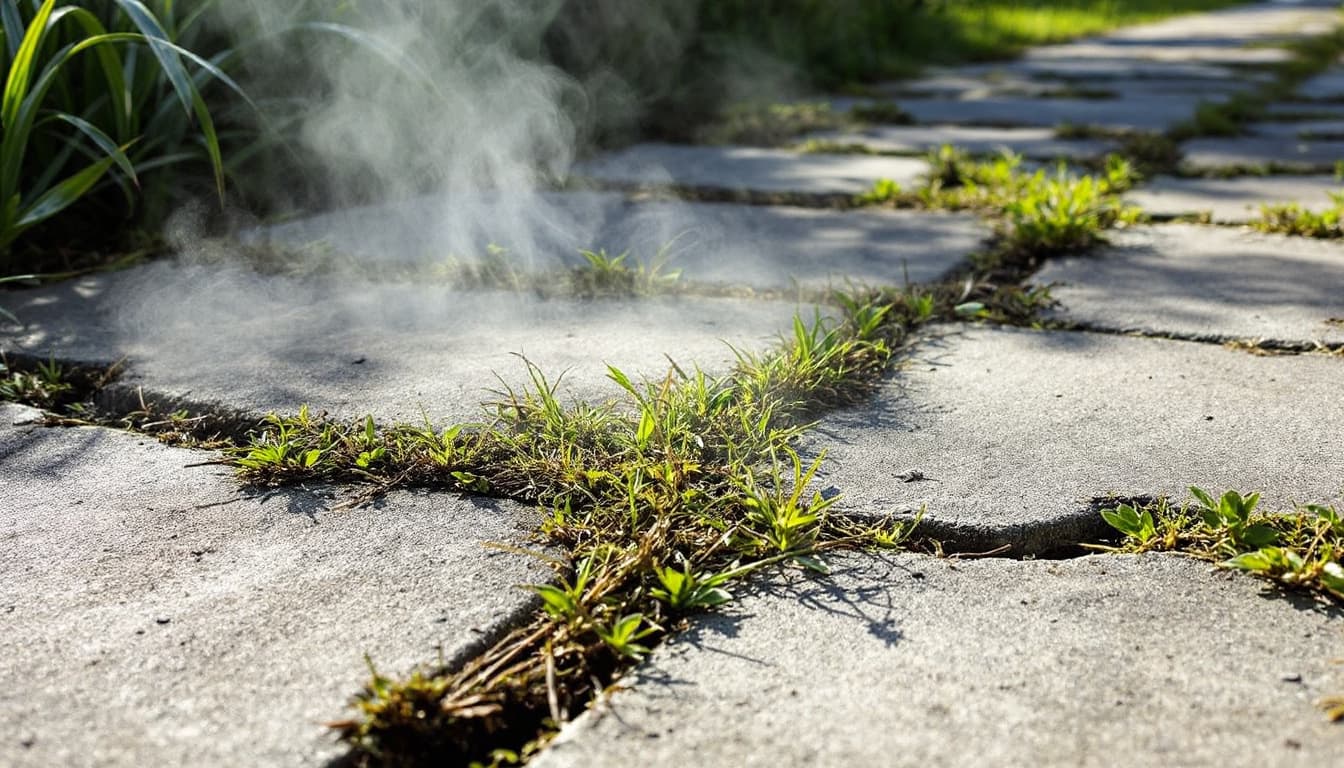
Steam weeding works on a completely different mechanism. Applying saturated steam at 95–100°C to the leaf and crown ruptures plant cell walls almost instantly through thermal shock. Water inside the cells expands and the cell membrane fails — think of it as a controlled, localised cooking of the plant tissue. Unlike a whipper-snipper or manual pull, it doesn't just remove top growth; the heat transfer travels far enough into the crown and upper root zone to compromise the plant's ability to push out new growth, particularly on annual weeds and young perennial infestations. It's a physical kill, not a chemical one — which means there's no residual herbicide sitting in the soil, no runoff risk into garden beds or stormwater drains during our summer storms, and zero withholding period for pets or kids to stay off the area.
The Numbers That Matter
Independent trials from European and Australian councils using commercial steam weeding units (often used on footpaths and public parks where glyphosate use is restricted) report 80–95% knockdown on annual weeds after a single pass, with perennial weeds like couch invading garden beds or oxalis typically needing 2–3 repeat treatments spaced 10–14 days apart to exhaust the root reserves. Compare that to glyphosate, which achieves a similar kill rate in one application but carries a soil-contact residual and a re-entry caution period — often 24–48 hours minimum, longer if pets dig or chew nearby.
Cost-wise, chemical treatment is cheaper per square metre upfront (roughly $0.50–$1.50/m² in product cost for a DIY spray), but steam weeding wins where it matters most for households: zero chemical exposure risk, no plant collateral damage to nearby ornamentals from spray drift, and no soil sterilisation — meaning you can replant garden beds immediately after treatment instead of waiting weeks for herbicide breakdown.
How to Steam Weed Your Yard Properly
-
Identify your target zones first. Steam weeding is most effective and cost-efficient on hard-surface weeds (driveway cracks, paver joints, gravel paths) and defined garden bed edges — not broadacre lawn weeds, where mechanical or targeted spot treatment still wins on time.
-
Treat weeds young, not established. Steam is most lethal on weeds under 10cm with soft leaf tissue. Woody-stemmed or deeply tap-rooted weeds (like established dandelion or thistle) will need repeat passes.
-
Apply steam slowly — 3 to 5 seconds per weed cluster. The goal is heat penetration to the crown, not just a quick surface pass. Rushing the application is the single biggest reason DIY steam attempts underperform.
-
Water the area lightly 24 hours prior if the soil is bone dry. Moist soil conducts and retains heat better, improving root-zone kill on perennials.
-
Follow up in 10–14 days. Check for regrowth at the crown and re-treat immediately — this window is when surviving root reserves are weakest and most vulnerable to a second thermal hit.
-
Time it outside storm season where possible. Applying steam treatments right before a Dec–Mar downpour reduces effectiveness, as heavy rain can encourage rapid regrowth from any surviving root tissue before it's fully exhausted.
Leave the Steam Unit to Us
Commercial steam weeding equipment isn't cheap, and getting the dwell time right across paving, garden beds, and lawn edges takes practice — too fast and you're just wilting leaves, too slow and you're wasting gas for no extra kill. It's exactly the kind of job that pays off being handled by someone who does it weekly, not seasonally.
Yard Guru now offers chemical-free steam weed treatments across Brisbane, Ipswich, and Toowoomba as part of our broader weed control service — safe for pets, safe for kids, and safe for the garden beds you've actually put effort into. Check out our services page or get a quote and we'll map out a treatment plan for your yard's specific weed pressure.