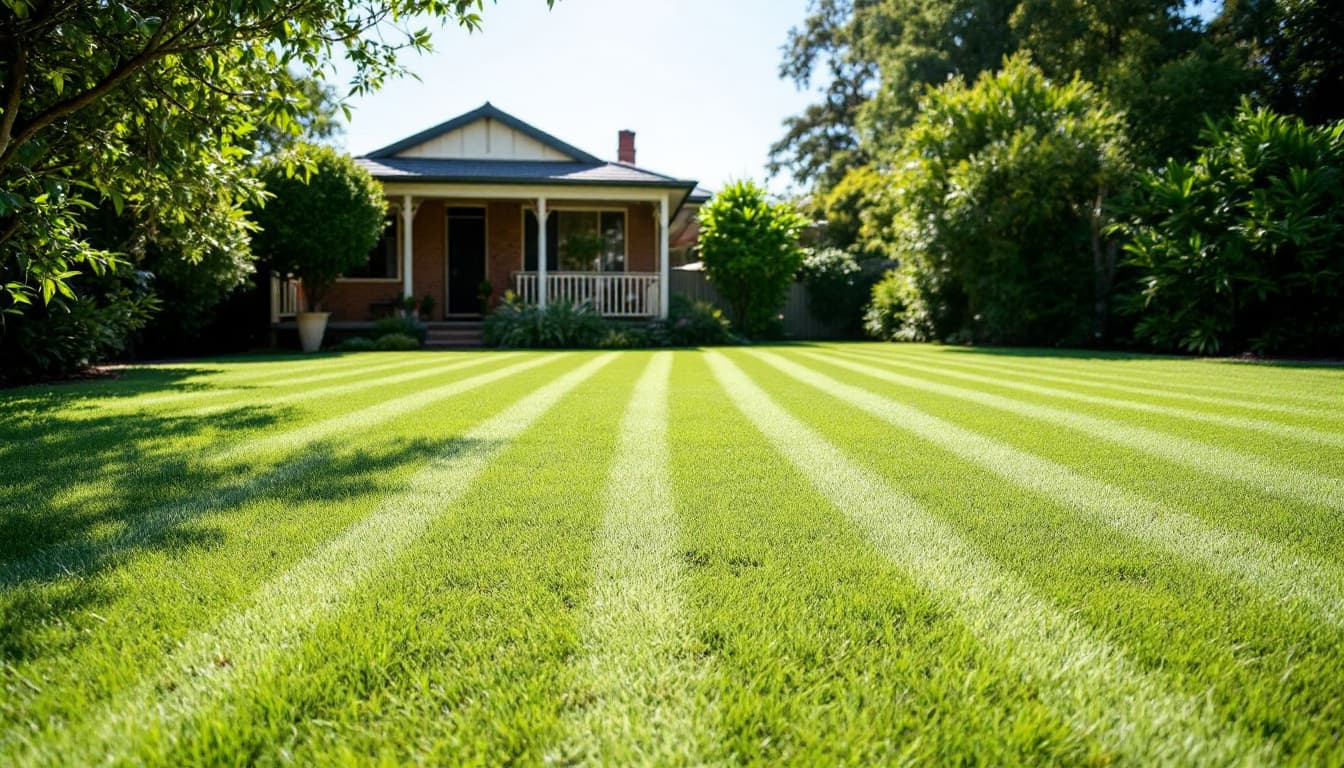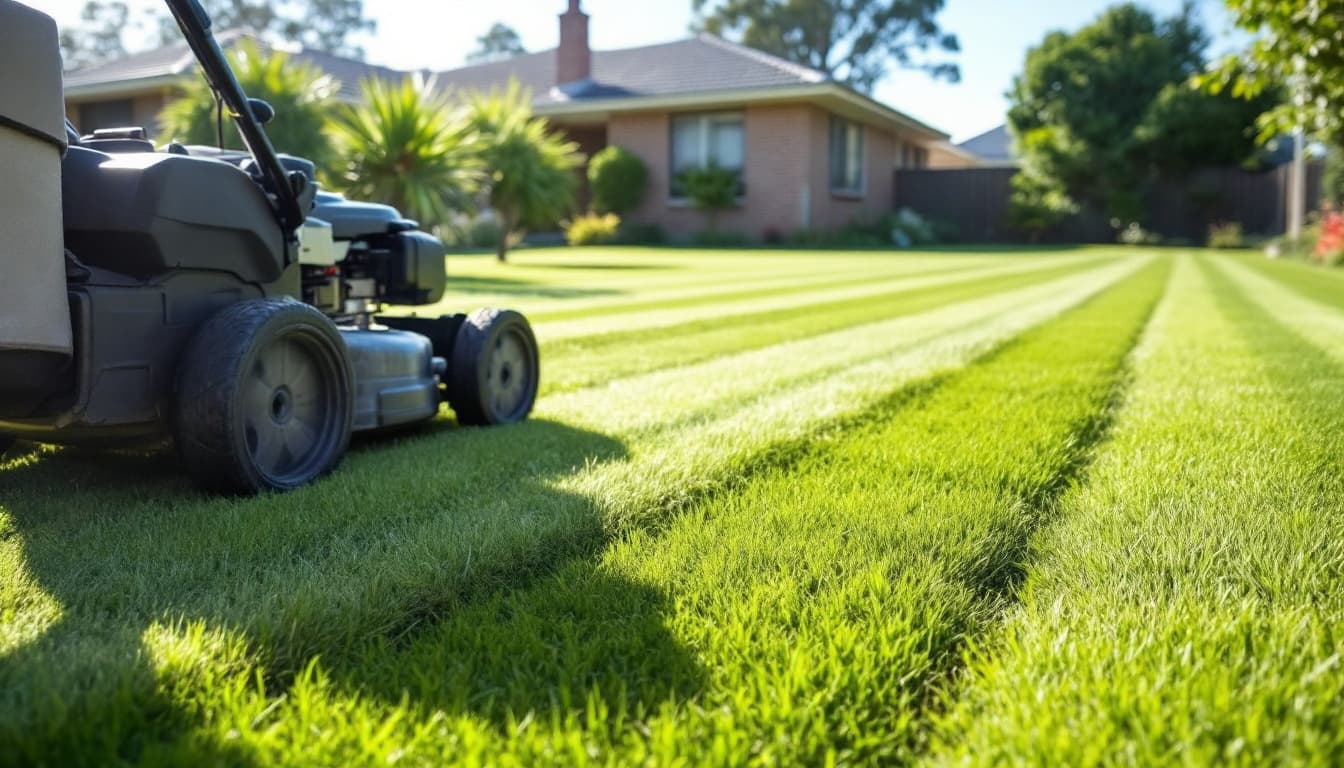
Fortnightly in summer, three-weekly (sometimes monthly) in winter, that's the correct answer for most SEQ lawns, and a rigid "every two weeks, all year" contract is usually the reason homeowners end up either paying for a mow that wasn't needed or staring at a paddock the day before their scheduled visit. The right cadence isn't a date on a calendar, it's a response to how fast your specific grass is growing in that specific month.
Why does mowing frequency need to change at all?
Grass growth is driven by soil temperature, daylight hours and available moisture, not by the Gregorian calendar. Buffalo and couch, the two dominant SEQ turf types, are both C4 (warm-season) grasses: they photosynthesise most efficiently when soil temperatures sit above roughly 15 to 20 degrees, and growth effectively stalls once winter cools the root zone. Combine that with Brisbane's heavily skewed rainfall pattern (mean rainfall of 159.6mm in January versus just 45.7mm in September, according to Bureau of Meteorology climate data for Brisbane) and you get a lawn that can put on two to three times more leaf material per week in January than it does in July. Same grass, same soil, wildly different growth rate depending on the month.
This is exactly why even Brisbane City Council doesn't run a fixed schedule on its own parks. Council mows "monthly in winter and fortnightly in summer, when grass grows faster," and steps up to weekly mowing on high-traffic parks at the peak of the warm season, as explained in its grass cutting schedule. If the organisation responsible for 70,000-plus hectares of public turf adjusts its cadence seasonally, a residential schedule locked to a single interval year-round was never going to be the smart default.
The one-third rule is the actual mechanism, not the mowing date
Here's the bit most "mow every fortnight" advice skips: the schedule only works if it respects the one-third rule. Turf agronomists, including the University of Queensland's own turf research, are explicit that you should never remove more than the top third of the grass leaf blade in a single cut. Cut more than that and you scalp the plant, stripping away the leaf area it needs for photosynthesis, shocking the root system and opening bare, stressed patches that are an open invitation for weed seed and fungal spores, particularly nasty in SEQ's humid, storm-season air.
So the real question isn't "two weeks or three weeks?" It's "how tall will this lawn be by the time I next mow it, and is that still within a third of its ideal height?" In peak spring and summer growth, a buffalo lawn maintained at 4 to 5cm can blow past the one-third threshold in 10 to 14 days. In June or July, that same lawn might sit comfortably for three, even four weeks without breaching it. Queensland Government waterwise guidance also recommends keeping lawns at a minimum of 3cm to shade the soil and protect roots from evaporation, which is another reason mowing too short, too often in a drought spell does more harm than mowing too long, too rarely.
What the growth curve actually looks like across an SEQ year
| Period | Typical growth driver | Realistic mowing interval |
|---|---|---|
| Dec to Feb (peak summer, wet season) | Warm soil + highest rainfall (BOM average 133 to 160mm/month) | 7 to 14 days |
| Mar to May (shoulder, cooling) | Growth slowing, rainfall tapering | 2 to 3 weeks |
| Jun to Aug (winter) | Minimal growth, cool soil | 3 to 4 weeks, sometimes longer |
| Sep to Nov (spring flush) | Rapid warm-up + rising rainfall | 10 to 14 days, can spike weekly after storms |
That spring flush is the exact period that catches homeowners off guard, and it's a real, physiologically grounded phenomenon, not an exaggeration: as soil temperature climbs through September and October, C4 turf breaks winter dormancy fast, and a lawn that needed monthly attention in July can suddenly demand a cut every 10 days by late October.
How Yard Gurus sets your actual mowing cadence
- Assess your turf type and block first. A Sir Walter buffalo lawn on a heavier clay block in Toowoomba's Middle Ridge behaves differently to a couch lawn on the sandy-loam blocks common around Narangba, because soil texture governs how much moisture is retained between rains.
- Set a season-adjusted default, not a fixed interval. Fortnightly through the summer growing season, stretching to three-weekly or monthly through winter, mirroring the same logic councils apply to public turf.
- Monitor leaf height against the one-third rule at every visit. If a lawn is tracking ahead of schedule after a run of storms, we bring the next visit forward rather than let it scalp.
- Build in weather flex. Extended wet spells can make mowing unsafe or damaging to waterlogged soil, exactly as councils note when rescheduling disrupted cuts; we do the same rather than mow a bog.
- Review every quarter. As daylight hours and soil temperature shift into a new season, the schedule shifts with it.
Stop guessing and get a cadence built around your lawn
A rigid fortnightly contract bills you through winter for mowing you don't need. A rigid three-weekly contract leaves your lawn scalped and stressed every spring. Neither protects your turf or your wallet. Yard Guru crews servicing Carseldine, Chermside, North Lakes and right across SEQ build each client's mowing schedule around actual growth conditions, not a one-size-fits-all calendar. Check out our full mowing and lawn care services or get a quote and we'll map out the right cadence for your lawn, season by season.
Sources
Common Questions
How often should I really be mowing my lawn in Brisbane during summer vs winter?
In SEQ, aim for roughly every 7 to 14 days during peak summer growth (December to February), stretching out to every 3 to 4 weeks (sometimes longer) through winter (June to August) when growth slows right down.
Why does my lawn suddenly need mowing more often in spring?
As soil temperatures climb through September and October, warm-season grasses like buffalo and couch break winter dormancy quickly, so a lawn that only needed monthly mowing in July can need a cut every 10 days by late October.
Is it bad to cut my grass too short to stretch out the time between mows?
Yes, cutting off more than the top third of the grass blade in one go (the one-third rule) scalps the lawn, stresses the roots and opens bare patches prone to weeds and fungus; Queensland Government guidance also recommends keeping lawns at a minimum of 3cm to protect roots and shade the soil.