If your quote for "mowing" a semi-rural block came back wildly different from your neighbour's suburban lawn quote, it's because you're probably asking for two different services: mowing cuts turf to a consistent 40 to 60mm finish for a manicured look, while slashing cuts rough pasture and paddock grass down to around 100mm using heavy-duty tractor or ride-on gear built for volume, not precision. Get the terminology mixed up when you call for a quote, and you'll either overpay for the wrong equipment or underquote a job that needs serious horsepower.
What's the Actual Difference Between Slashing and Mowing?
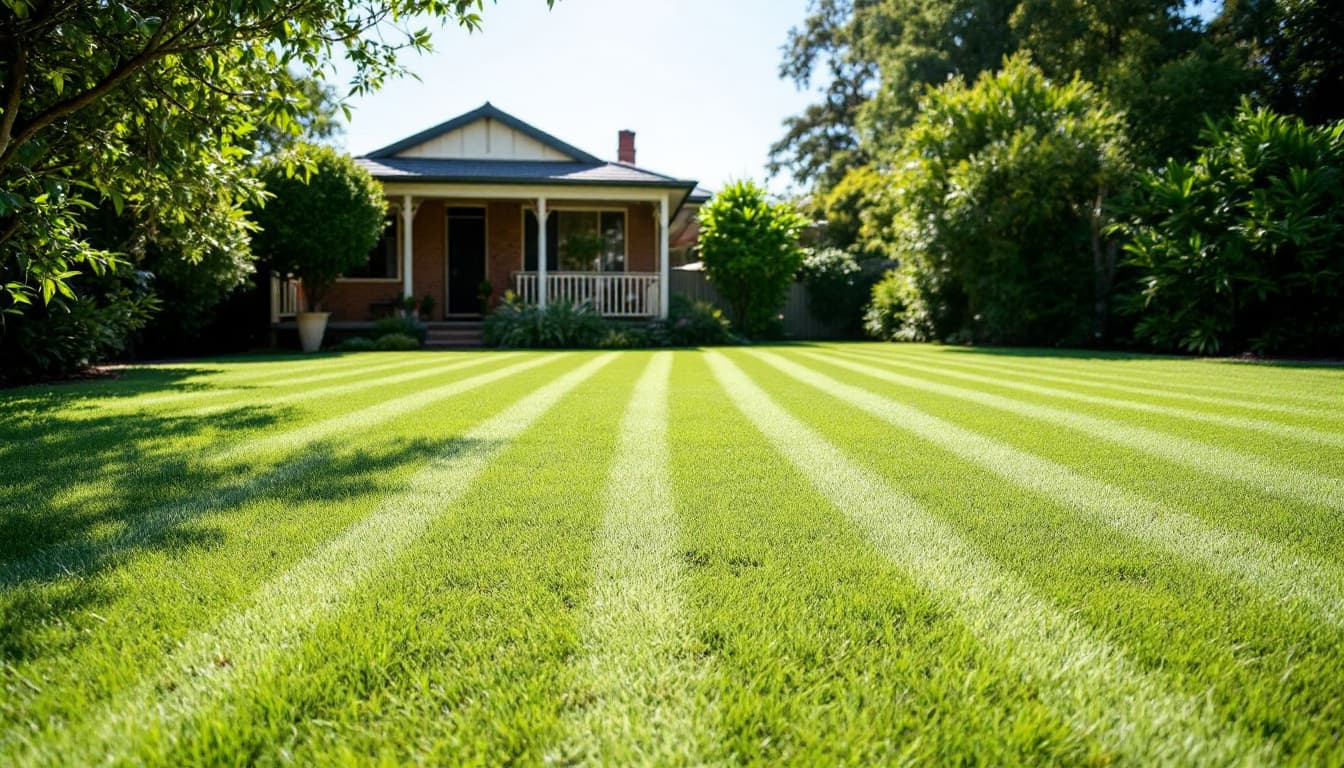
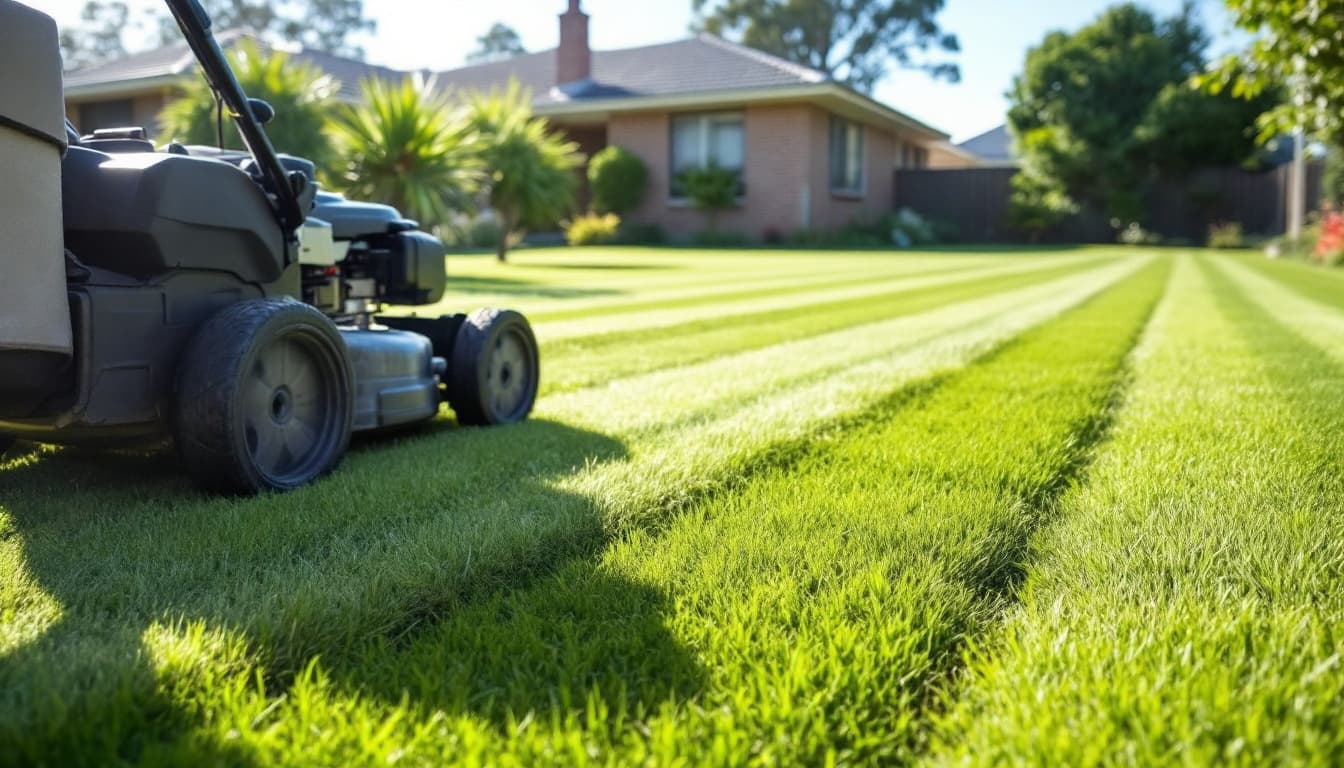
Mowing is a turf management task. It's designed to maintain an established lawn (Buffalo or Couch, typically) at a consistent, low height using a cylinder or rotary mower, producing a fine, even finish suited to a backyard, courtyard, or standard suburban block. Council operational specs for parks and reserves confirm the benchmark: turf height maintained at 40 to 60mm for mown recreational areas.
Slashing is a vegetation control task, not a lawn task. It's used on broadacre paddocks, overgrown blocks, easements, and semi-rural allotments where the "grass" is really a mix of pasture grasses, weeds, and woody regrowth too tall and too dense for a domestic mower deck. The same council spec sets the broadacre/slashed benchmark at 100mm, roughly double the height of a mown lawn, because the goal isn't a fine finish, it's knocking down growth and reducing fire and seeding risk. Brisbane City Council's own guidance states plainly that tractor slashers suit large areas while mowers or whipper snippers suit small to medium ones, with whipper snippers filling in tight spots like fence lines that neither machine can reach.
Why the Equipment (and Price) Gap Is So Large
The mechanical reality is simple: a rotary mower deck is built for fine, low-clearance cutting on prepared turf. A tractor slasher is a PTO-driven, heavily reinforced deck designed to shear through dense, fibrous, sometimes woody growth without stalling or self-destructing. That's a different machine, different horsepower requirement, different maintenance schedule, and a genuinely different risk profile for the operator.
WorkSafe Queensland has issued incident alerts specifically about slasher attachments dropping unexpectedly during servicing, and mandates that anyone working near or under a slasher must have the engine off, PTO disengaged, and key removed before doing so. Tractors used for slashing also require ROPS (roll-over protective structure) fitted as a legal requirement under the Rural Plant Code of Practice 2024, and rotating blades must be properly guarded under AS/NZS 2153.1. None of this applies to a suburban ride-on doing a 600m² block. That compliance overhead, plus machine size, fuel burn, and transport logistics, is exactly why a per-hectare slashing quote looks nothing like a per-visit mowing quote, and why a contractor turning up with the wrong machine for the job either can't do the work or does it badly.
What the Numbers Actually Tell You
Council specifications treat these as entirely separate maintenance categories, not a sliding scale of the same job. Here's how they typically compare on a working property:
| Factor | Standard Mowing | Slashing |
|---|---|---|
| Typical finish height | 40 to 60mm | ~100mm |
| Suited to | Lawns, courtyards, small to medium yards | Paddocks, easements, overgrown/semi-rural blocks |
| Equipment | Push/ride-on rotary or cylinder mower | Tractor-mounted PTO slasher |
| Frequency (SEQ) | Weekly to fortnightly in growing season | As-needed, often tied to fire hazard reduction |
| Key compliance issue | Minimal | ROPS, PTO guarding, fire ant biosecurity movement |
Seasonal timing matters for both. Regional councils note that mowing and slashing activity concentrates from October to May, tracking SEQ's warm-season growth flush, with frequency dropping right back over winter.
Do You Legally Have to Slash Your Block?
If your property backs onto bushland or sits in a mapped bushfire-prone area (common around the rural-urban fringe of Ipswich, Gatton, Laidley, and outer Moreton Bay), you carry a direct legal obligation. Queensland Fire Department guidance requires landowners to plan for bushfire hazards by "trimming trees, mowing grass, removing flammable material . . . particularly if your land shares boundaries with bushland." Brisbane City Council reinforces this for built-up fringe suburbs too, noting it's your responsibility to keep your property free of overgrown or hazardous vegetation. Properties over 4000m² with a mapped bushfire risk rating can also clear wider firebreaks under the Planning Regulation 2017's "essential management" provision, up to 1.5 times the height of adjacent vegetation or 20m, whichever is wider. A 5-acre block in Laidley with a grass-fire risk profile needs a genuinely different service to a 600m² lawn in Fig Tree Pocket, and council will hold you to it either way.
How to Get the Right Quote the First Time
- Measure your block, or pull the lot size from your rates notice. Under roughly 1000m² of maintained lawn is almost always a mowing job; anything moving into acreage territory, especially with paddock grass or regrowth, is a slashing conversation.
- Describe the grass, not just the area. "Knee-high paddock grass with blackberry regrowth" gets you an accurate slashing quote; "buffalo lawn, mowed monthly" gets you a mowing quote. Mixing the two descriptions is the single biggest cause of quote mismatches.
- Check access. Gate widths, slopes, and stumps or hidden obstacles (a real hazard for slasher decks and tyres) all affect machine choice and price.
- Flag boundary and bushfire-prone status if you're near bushland, so your contractor can advise on legally compliant clearing widths.
- Ask what's included, whipper snipping along fence lines and around obstacles is usually a separate line item from the main cut, on both mowing and slashing jobs.
Get the Right Machine on Your Block, First Time
Whether you're maintaining a tidy Buffalo lawn in Bridgeman Downs or need a semi-rural block near Gatton brought back under control before fire season, matching the service to the job saves you money and avoids a contractor turning up with the wrong deck for your grass. Yard Guru is fully insured (including at heights) and quotes mowing and slashing as genuinely separate services, so you're never paying acreage rates for a suburban lawn or getting a fine-finish mower sent to a paddock. Check our full mowing services or get an accurate quote based on your actual block size and grass condition.
Sources
- Brisbane City Council: Slashing and Mowing (weed control methods)
- Fraser Coast Regional Council: Mowing & Slashing Maintenance Specification (PDF)
- Lockyer Valley Regional Council: Slashing and Mowing
- Queensland Fire Department: Bushfire Planning
- WorkSafe Queensland: Two workers injured by tractor slasher
Common Questions
How do I know if I need mowing or slashing for my property?
If your block is under roughly 1000m2 with an established lawn like Buffalo or Couch, you need mowing; if it's a larger semi-rural block with paddock grass, weeds, or woody regrowth, you need slashing. Describing the grass condition (not just the area) to your contractor is the best way to get the right quote.
Why is a slashing quote so much more expensive than a mowing quote for the same size block?
Slashing uses a PTO-driven tractor slasher rather than a standard mower deck, which comes with higher fuel burn, transport logistics, and legal compliance requirements like ROPS and blade guarding under the Rural Plant Code of Practice 2024. This heavier equipment and compliance overhead is why per-hectare slashing rates look nothing like per-visit mowing rates.
Am I legally required to slash my land if it's near bushland?
Yes, Queensland Fire Department guidance requires landowners near bushland to manage fire hazards by mowing, slashing, and removing flammable vegetation, and Brisbane City Council can also enforce action against overgrown or hazardous properties. Larger blocks over 4000m2 with a bushfire risk rating may even clear wider firebreaks under the Planning Regulation 2017.