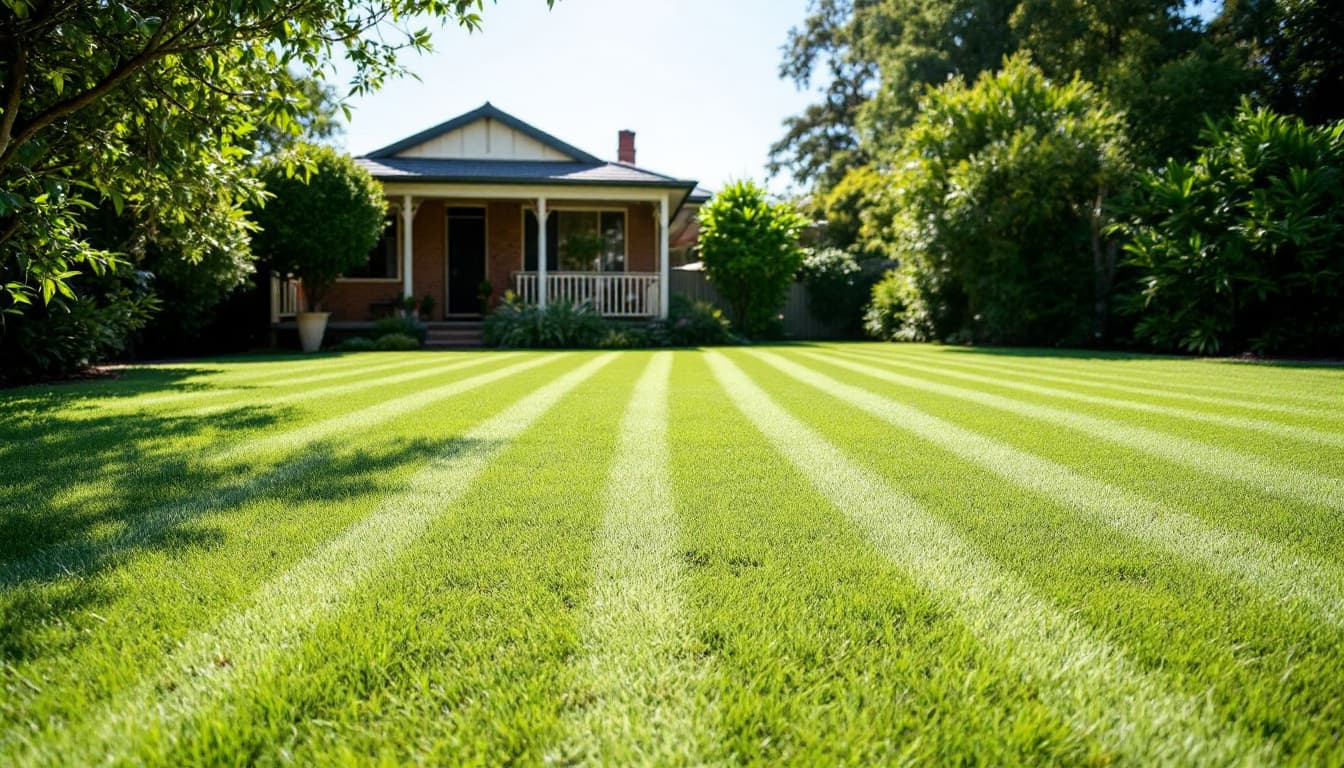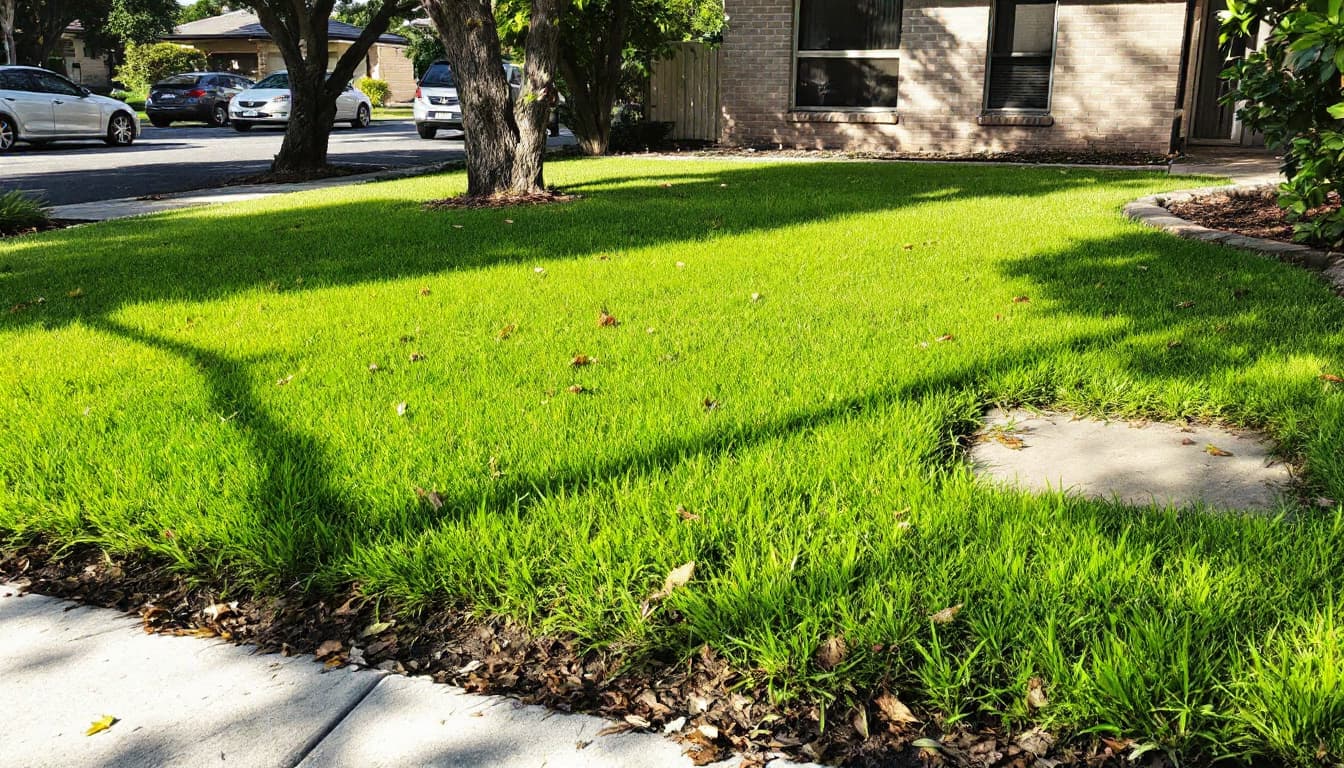
Mid-September to mid-October is your window for top-dressing and overseeding in SEQ, and if you're still eyeing off those bare, thin patches from winter dormancy wondering why they haven't bounced back on their own, the honest answer is: they won't, not without intervention. Buffalo and Couch lawns don't self-repair large dead zones once soil compaction and thatch build-up choke the crown of the plant, which is exactly what's happened if your lawn looks patchy despite regular mowing and a decent watering routine.
Why Doesn't My Lawn Just Fill In By Itself?
Turf spreads via stolons (Buffalo) or stolons and rhizomes (Couch), horizontal runners that need direct soil contact to strike new roots. Over a Brisbane winter, thatch (that spongy layer of dead organic matter sitting between the soil and green leaf) builds up and physically blocks those runners from reaching the ground. At the same time, SEQ's clay-heavy soils, common in suburbs like Mitchelton and Everton Park, compact under foot traffic and summer storm pounding, squeezing out the oxygen turf roots need for cell respiration. The result is a lawn that looks alive on top but is starving underneath.
Top-dressing (a thin layer of sandy loam or turf-specific blend spread over the lawn) does two things at once: it levels minor surface irregularities and gives runners fresh, loose material to root into. Overseeding introduces new genetic material to thicken density, though it's worth being clear that Buffalo lawns spread via runners, not seed, so "overseeding" for Buffalo really means encouraging existing stolons via top-dressing, while Couch lawns can genuinely be oversown with hulled couch seed.
What Does the Data Actually Say About Timing?
Soil temperature, not the calendar, is the trigger. Buffalo and Couch both need consistent soil temps above 16-18°C at the 10cm depth to break dormancy and actively grow runners. BOM data shows Brisbane's average soil temperature crosses that threshold reliably from mid-September, with October averaging daytime maximums of 26-27°C and still-moderate rainfall (Brisbane's wet season doesn't ramp up until December). That gives you a 6-8 week window (mid-September to early November) where new growth can establish root systems before the December-March storm season arrives and waterlogging risk spikes.
Miss this window and try to top-dress in January, and you're fighting two problems at once: fungal pressure from humidity (brown patch and fusarium thrive in wet, warm thatch) and root systems that haven't had time to anchor before storm deluges of 50-100mm in a single event wash loose material straight off the surface.
How Do I Actually Top-Dress and Overseed a Brisbane Lawn?
-
Scalp and dethatch first. Mow to the lowest recommended height for your turf type (Buffalo: 30-50mm, Couch: 15-25mm) and run a dethatching rake or hire a machine for lawns over 200m². Skipping this step is the single biggest reason DIY top-dressing fails, the sand just sits on top of thatch instead of reaching soil.
-
Aerate compacted zones. Hollow-tine aeration (or a garden fork for smaller areas) on high-traffic strips, driveway edges, and clay-heavy patches. This is critical in suburbs with heavier clay profiles, think parts of Redbank Plains or Collingwood Park, where compaction is more severe than the sandy loams closer to the bay.
-
Choose the right top-dressing mix. A washed river sand and organic loam blend (roughly 70/30) suits Buffalo. Avoid pure sand on clay soils, it creates a layering effect that actually worsens drainage at the interface. For Couch renovations, a lighter sandy loam works better with seed-to-soil contact.
-
Spread at 5-10mm depth. Anything thicker smothers existing crowns. Use the back of a rake or a levelling drag mat, working it into the profile rather than leaving it sitting proud.
-
Overseed Couch areas at 15-25g/m² using hulled seed pressed into the top-dressing layer, then a light second dusting to cover.
-
Water little and often for 14-21 days, keeping the top 10-15mm of soil consistently moist (not saturated) to support germination and stolon strike, then transition back to deeper, less frequent watering once establishment is visible.
-
Hold off mowing for 2-3 weeks minimum, and use a catcher on the first few cuts to avoid ripping out shallow new growth.
When Is It Worth Calling In the Professionals?
If you're dealing with more than 30-40% bare or thinning turf, uneven grading, or a lawn over 400-500m² (a full quarter-acre block, common in older Carseldine and Aspley streets), the equipment and timing precision matter more than most homeowners expect. Getting the top-dressing mix wrong on clay soil, or missing the soil-temperature window by even a few weeks, can cost you an entire season's growth. Our crews carry the right dethatching and aeration gear for SEQ's soil variability and know exactly which turf blend suits your suburb's profile. Check out our lawn services for a proper renovation plan, or get a quote and we'll assess your lawn's compaction, thatch, and turf type before recommending a fix, not a generic bag of sand off the shelf.
Common Questions
Why hasn't my Buffalo lawn filled back in after winter even though I'm watering and mowing it regularly?
Thatch build-up over winter blocks the horizontal runners (stolons) from reaching the soil, and compacted clay squeezes out the oxygen roots need, so the lawn looks alive on top but is starving underneath. Without top-dressing and aeration to fix these two issues, large bare patches won't self-repair.
Can I overseed my Buffalo lawn like you would a Couch lawn?
Not really: Buffalo spreads via stolons, not seed, so 'overseeding' for Buffalo actually means top-dressing to encourage existing runners to root, while Couch lawns can genuinely be oversown with hulled couch seed at 15-25g/m².
What's the best time of year to top-dress a lawn in Brisbane?
Mid-September to mid-October is ideal, since Brisbane's soil temperature reliably crosses the 16-18°C threshold needed for active growth around mid-September, giving you roughly a 6-8 week window before the December-March storm season brings waterlogging and fungal risk.