The Green Carpet That Isn't Grass
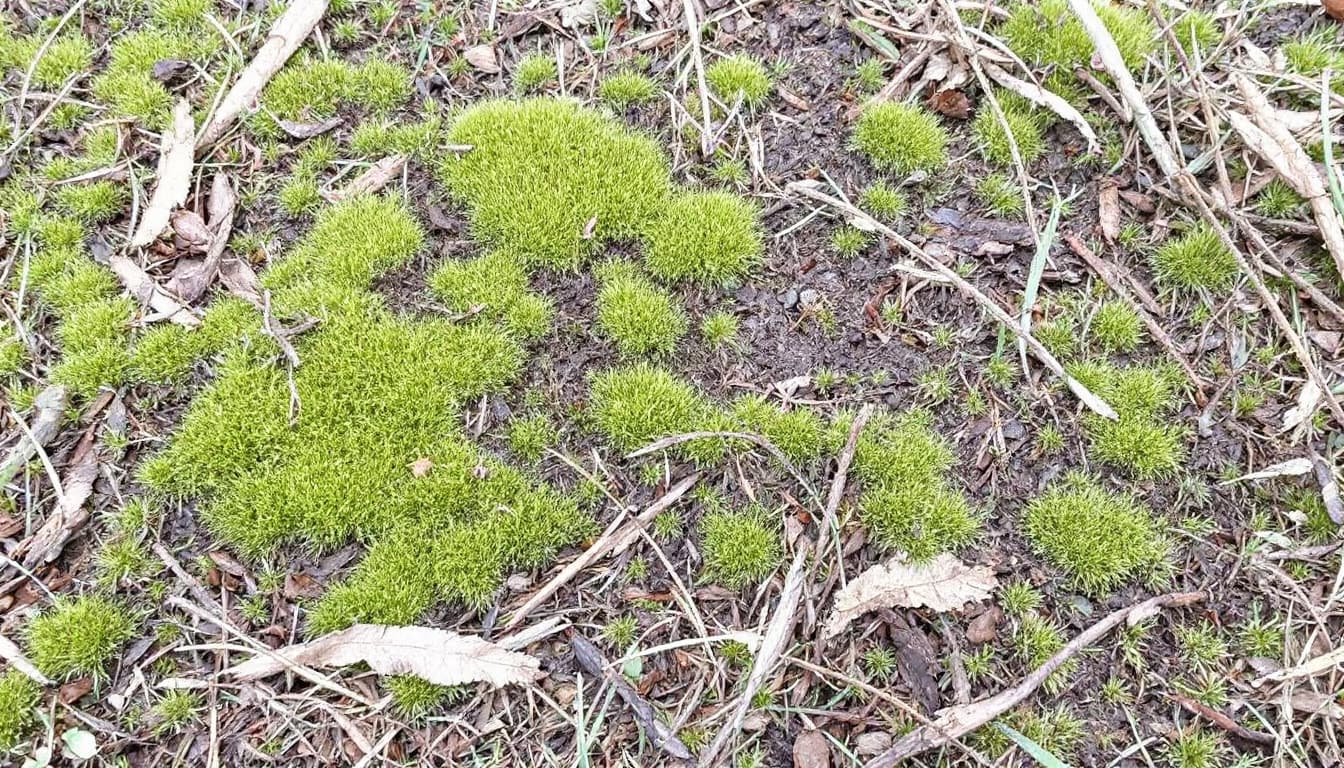
If you've noticed a soft, spongy patch in the shadiest corner of your Brisbane lawn — the one that feels almost pleasant to walk on barefoot but definitely isn't your Buffalo or Couch — you've got moss. It usually turns up under the jacaranda, along the south side of the fence, or in that low spot near the downpipe that never quite dries out. And no amount of mowing, watering or wishful thinking makes it go away. In fact, mowing it just spreads it further.
Moss isn't a lawn disease and it isn't killing your turf directly. It's a symptom. It's colonising space that your grass has vacated because the growing conditions there no longer suit turf — and increasingly do suit moss. Treat only the moss and it's back within a season. Fix the underlying conditions and it struggles to re-establish at all.
Why Moss Wins and Grass Loses
Moss is a non-vascular plant — no true roots, no need to draw water and nutrients up through soil the way turf grass does. It absorbs moisture directly through its leaf-like structures and reproduces via spores that travel on wind and water. That biology gives it three massive advantages in exactly the conditions common to SEQ backyards:
Low light tolerance. Buffalo needs a minimum of roughly 4 hours of direct sun daily to photosynthesise enough for dense growth; Couch wants 6+. Moss is comfortable with a fraction of that. Once turf thins from shade stress, moss fills the gap because it simply doesn't need the light turf does.
Compaction and poor drainage. SEQ's clay-heavy subsoils — common across suburbs like Kenmore, Chermside and parts of Ipswich — compact under regular foot traffic and mower wheels. Compacted soil has fewer macropores for oxygen exchange, which suffocates turf roots but doesn't bother moss at all, since it isn't drawing oxygen through a root system.
Persistent surface moisture and acidity. Brisbane's storm season (December–March, when we get the bulk of that ~1150mm annual rainfall) waterlogs low-lying or shaded areas for days at a time. Combine that with leaf litter breakdown lowering soil pH toward the acidic side, and you've built a five-star moss hotel. Turf roots hate sitting wet; moss doesn't care.
So moss isn't invading healthy turf — it's colonising turf that's already dying from shade, compaction, or waterlogging. That's the root cause conversation most homeowners never have.
The Number That Matters: pH and Light
Here's the data point worth pinning to your fridge: turf grass growth drops off sharply once soil pH falls below 5.5, while moss tolerates a pH range down to about 4.5–5.0 quite comfortably. In shaded SEQ lawns with heavy leaf drop (jacarandas, poincianas, gums), we regularly test soil pH between 5.0 and 5.8 — squarely in the zone where turf is struggling and moss is thriving.
Separately, light meter readings we've taken on problem lawns under established canopy typically show 2–3 hours of usable direct sun per day, well under the 4-hour minimum Buffalo needs to maintain density. That gap — even just 1–2 missing hours of sun — is often the entire difference between a lawn that self-repairs and one that slowly moss-carpets over three to four years.
The Fix: A Sequenced Renovation, Not a Spray-and-Pray
Iron sulphate ("lawn moss killer") will blacken and kill moss in 48–72 hours — that part's easy and satisfies the itch to see results fast. But if you stop there, you're treating the symptom while the cause (compaction, acidity, shade) sits untouched underneath. Here's the proper sequence:
-
Test soil pH first. A $15 soil pH kit from Bunnings gives you a baseline. Below 5.5, that's your primary driver, not just shade.
-
Apply ferrous sulphate (iron sulphate) at 4–5g per litre of water, applied evenly with a watering can or sprayer. This kills moss without the collateral damage that lawn-safe herbicide alternatives sometimes cause to Buffalo. Avoid old-school garden lime or caustic salt treatments — they're inconsistent, can spike soil pH too aggressively, and risk scorching turf edges.
-
Rake out the dead moss 3–5 days after treatment, once it's blackened and desiccated. Leaving it in place blocks light and airflow to the soil surface, undoing your own work.
-
Core aerate the affected area. This is the step most DIY moss treatments skip entirely, and it's the one that actually addresses compaction. Hollow-tine aeration pulls physical plugs of soil out (not just spikes holes), improving oxygen exchange and drainage at root depth — critical in SEQ's clay-transition soils.
-
Top-dress with a sandy loam or aeration-specific compost blend to fill the aeration holes and gradually lift soil pH and structure over subsequent seasons.
-
Address the light deficit. Selectively prune lower canopy branches to lift shade by even 1–2 hours of exposure, or accept the area needs a shade-tolerant groundcover instead of turf.
-
Oversow with Buffalo (shade-tolerant varieties like Sir Walter) or Couch depending on sun recovery, timed for the October–March growing window when SEQ soil temperatures support strong germination.
When It's Time to Call in the Guru
Soil pH correction, hollow-tine aeration and turf renovation are exactly the kind of layered, seasonal work that separates a quick fix from a lawn that stays moss-free for good. Our lawn care programs at Yard Guru combine soil testing, targeted iron treatment, aeration and renovation scheduling so you're not guessing — and not re-treating the same patch every winter.
Check out our full lawn services or get a quote and we'll assess your specific shade, drainage and soil profile before recommending a fix that actually sticks.