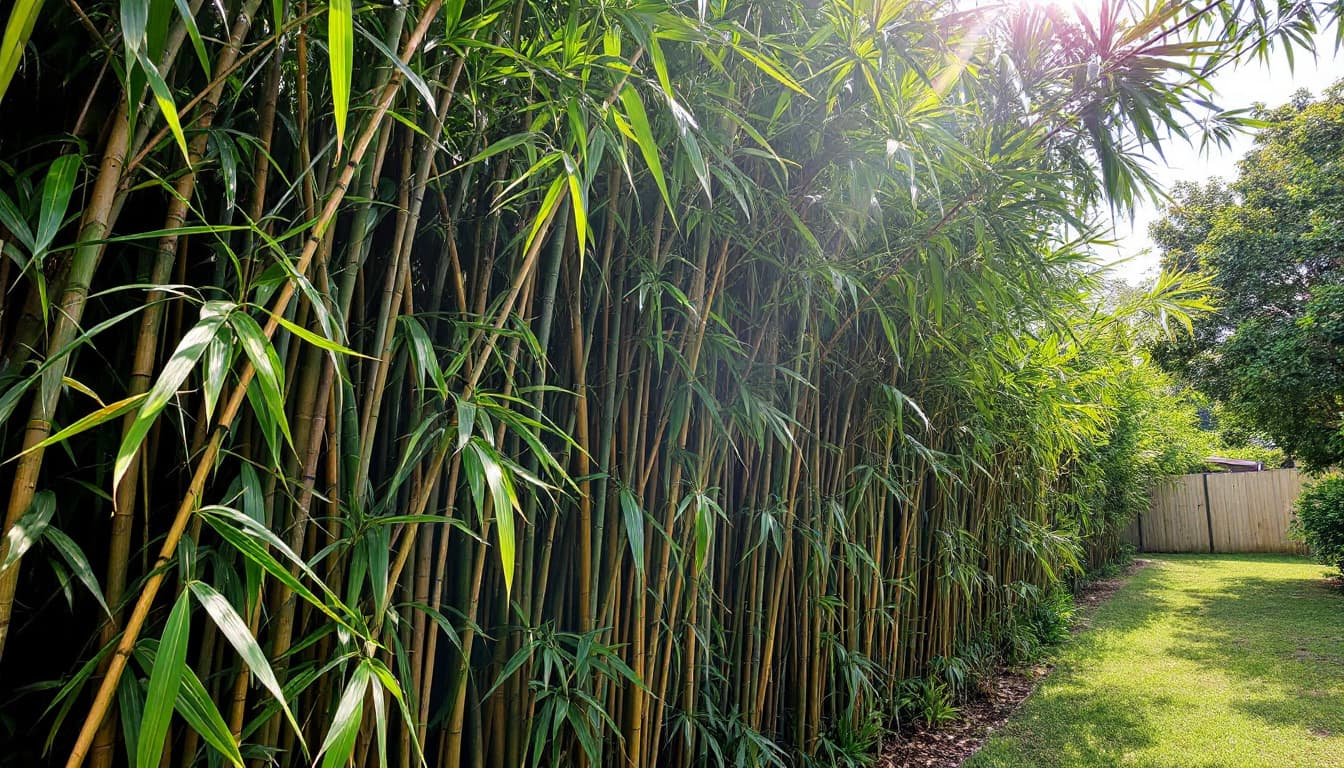
If you've ever come home from a week away to find a bamboo cane has punched clean through a paver, cracked a pool coping tile, or popped up in the neighbour's vegie patch three metres from where you planted it, you already know this isn't a "trim it back twice a year" problem. It's a rhizome problem. And we see it constantly across Brisbane's older suburbs — Ashgrove, The Gap, Chapel Hill, Ipswich acreage blocks — where someone planted a "clumping" screening bamboo in 1998 that turned out to be a running species, and it's now colonising garden beds, driveways, and Colorbond fence lines with total disregard for property boundaries.
Why Cutting It Down Never Works (And Actually Makes It Worse)
Here's the bit most homeowners get wrong: bamboo isn't really one plant. What you're looking at above ground — the culms (canes) — are just the visible tip of an enormous underground rhizome network that can extend 3–10 metres from the original planting, sitting anywhere from 15cm to 50cm below the surface depending on your soil profile.
Running bamboo species (commonly Phyllostachys and Bambusa varieties sold cheaply as instant screening) store the majority of their carbohydrate reserves in that rhizome mass, not in the canes. When you slash the canes to ground level and walk away, you haven't killed anything — you've triggered a stress response. The rhizome reads "canopy loss" as a survival threat and pushes new shoots aggressively from dormant nodes, often producing denser regrowth than before. This is the same physiological principle that makes mowing off weeds without treating the root system pointless — except bamboo's root system is orders of magnitude larger and more resilient.
In SEQ's clay-loam and clay-sand transition soils, rhizomes travel further and stay viable longer than in pure sand, because the clay content holds moisture around dormant buds through our dry winter months (average July rainfall in Brisbane is under 30mm), keeping them primed to resprout the moment soil temperatures climb again in spring.
The Numbers That Should Change Your Approach
Industry removal data (backed by our own job logs) shows a single mature, uncontrolled bamboo clump — say a 4m x 4m footprint of Phyllostachys aurea (golden bamboo) — can contain 15,000–25,000kg of rhizome and soil mass once fully excavated. Cutting canes alone costs a homeowner roughly $150–$400 in labour or hire equipment, repeated 3–4 times a year, indefinitely — with zero reduction in the underground network. Full mechanical excavation plus rhizome-targeted herbicide treatment, done once, typically runs $800–$2,500 depending on clump size and access, but ends the problem within one to two growing seasons rather than never.
Left unmanaged, running bamboo spreads at a documented rate of up to 1–3 metres per year in favourable SEQ conditions — meaning a clump ignored for five years isn't a garden bed problem anymore, it's a boundary dispute and a structural risk to slabs, retaining walls, and underground pipes.
The Actual Kill Process (Cut-and-Poison, Done Properly)
- Cut all canes to 15–20cm stumps, ideally in late summer to early autumn (Feb–April) when the plant is translocating sugars down into the rhizome for winter storage — this is when systemic herbicide travels furthest into the root system.
- Immediately treat the fresh-cut stump (within 15–30 minutes, before the wound seals) with a glyphosate concentrate (360g/L or higher) applied undiluted directly into the hollow culm and onto the cut surface. Diluted spray-on treatment on regrowth foliage is a backup, not the primary method — bamboo's waxy leaf cuticle repels foliar sprays far more than broadleaf weeds.
- Repeat monitoring every 3–4 weeks for regrowth. Any new shoots should be cut and treated the same way immediately — this is non-negotiable, because untreated regrowth restarts the rhizome's energy reserves.
- Excavate the rhizome mat once the clump is visibly dying back (usually 2–4 months post-treatment) using a mini excavator or mattock for smaller clumps. This is the step most DIY attempts skip, and it's why bamboo "comes back from nowhere" two years later.
- Install a physical rhizome barrier (HDPE root barrier, minimum 60cm depth, angled outward at the top) if any bamboo remains on a neighbouring property, since rhizomes will re-invade from next door regardless of what you do on your own block.
- Rebuild the garden bed with fresh soil, organic matter, and a fabric or edging barrier before replanting, so you're not just cosmetically covering a rhizome network that's still 40% viable.
Where This Fits Into Your Yard
Bamboo removal isn't a mow-and-go job — it's structural garden bed rehabilitation, and it's exactly the kind of work our garden bed renovation crews handle week to week across Brisbane, Ipswich, and Toowoomba. We combine correct-season cutting, licensed herbicide application, and full rhizome excavation so you're not back here in eighteen months wondering why it's growing through the new retaining wall. If you've got a clump encroaching on a fence line, pool, or slab, get it assessed properly before it costs you more than a garden bed — book a quote or see how we approach garden bed work on our services page.