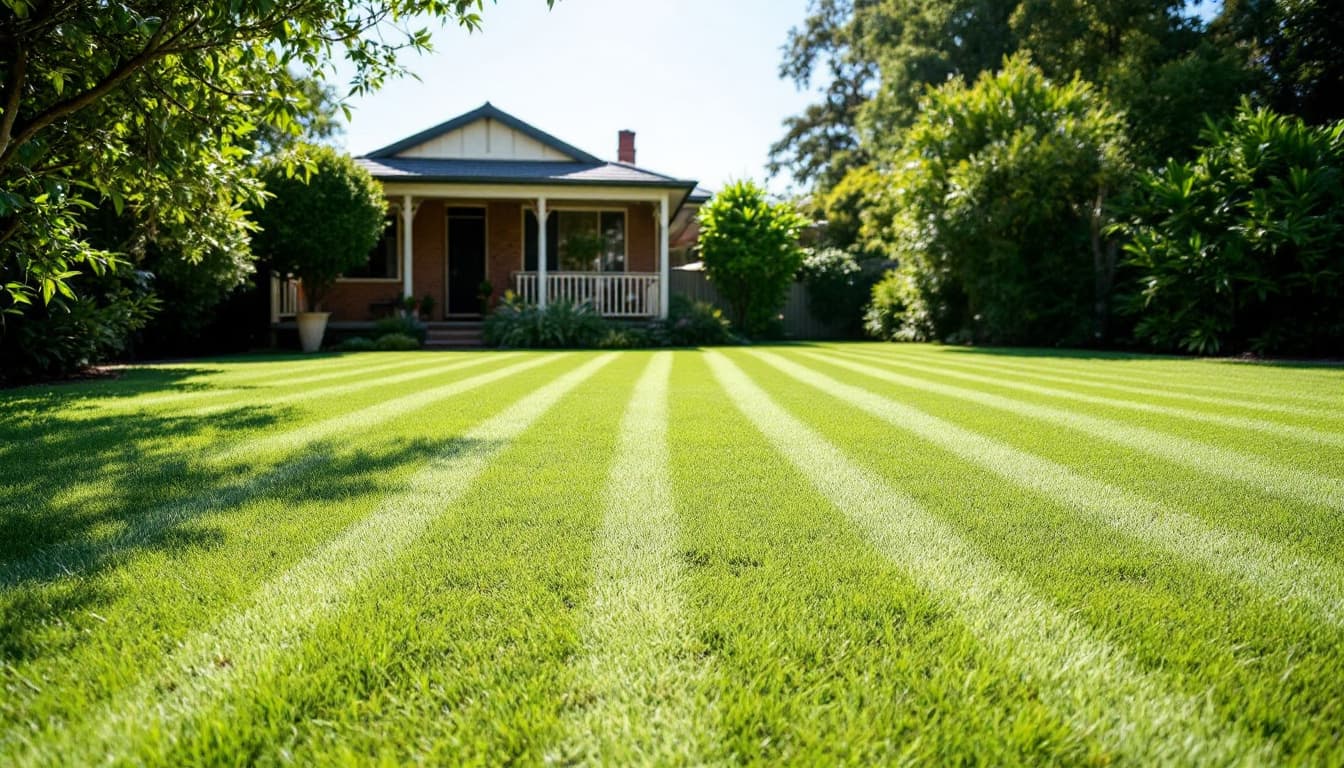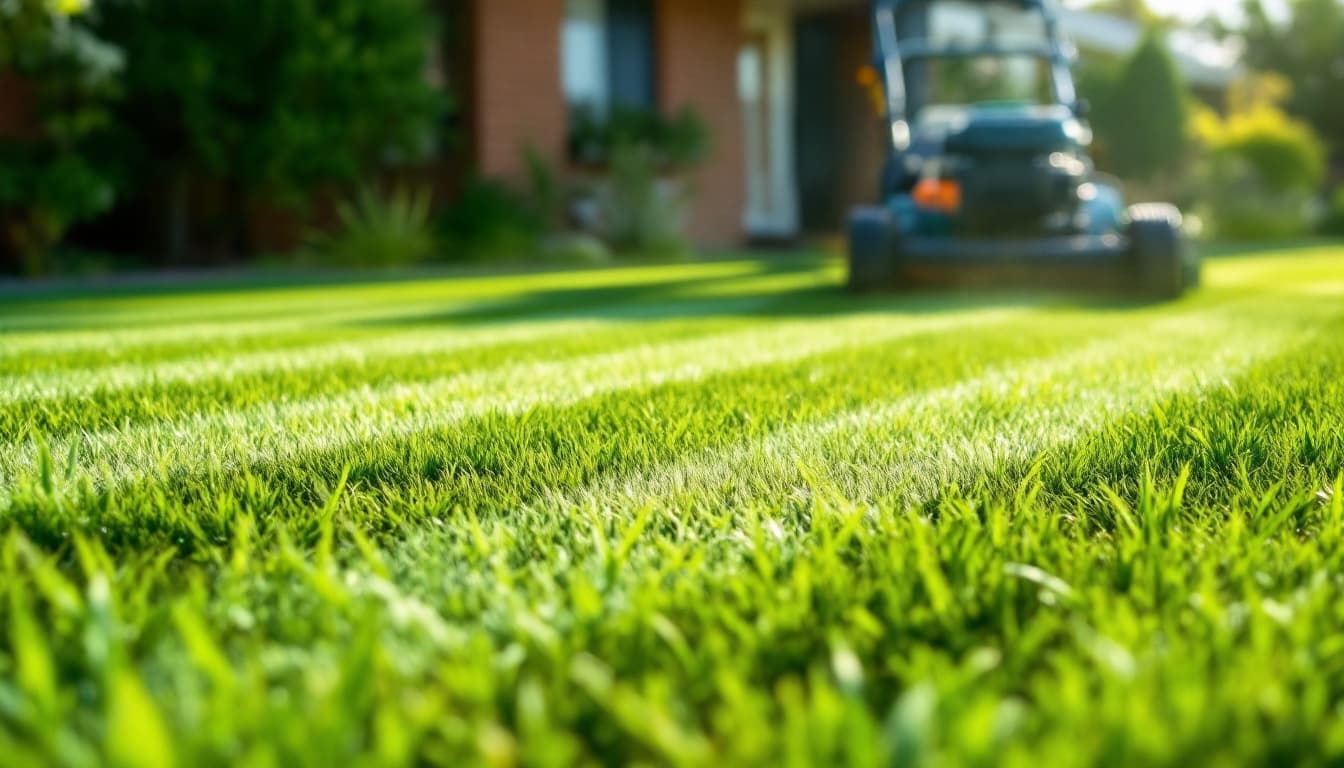
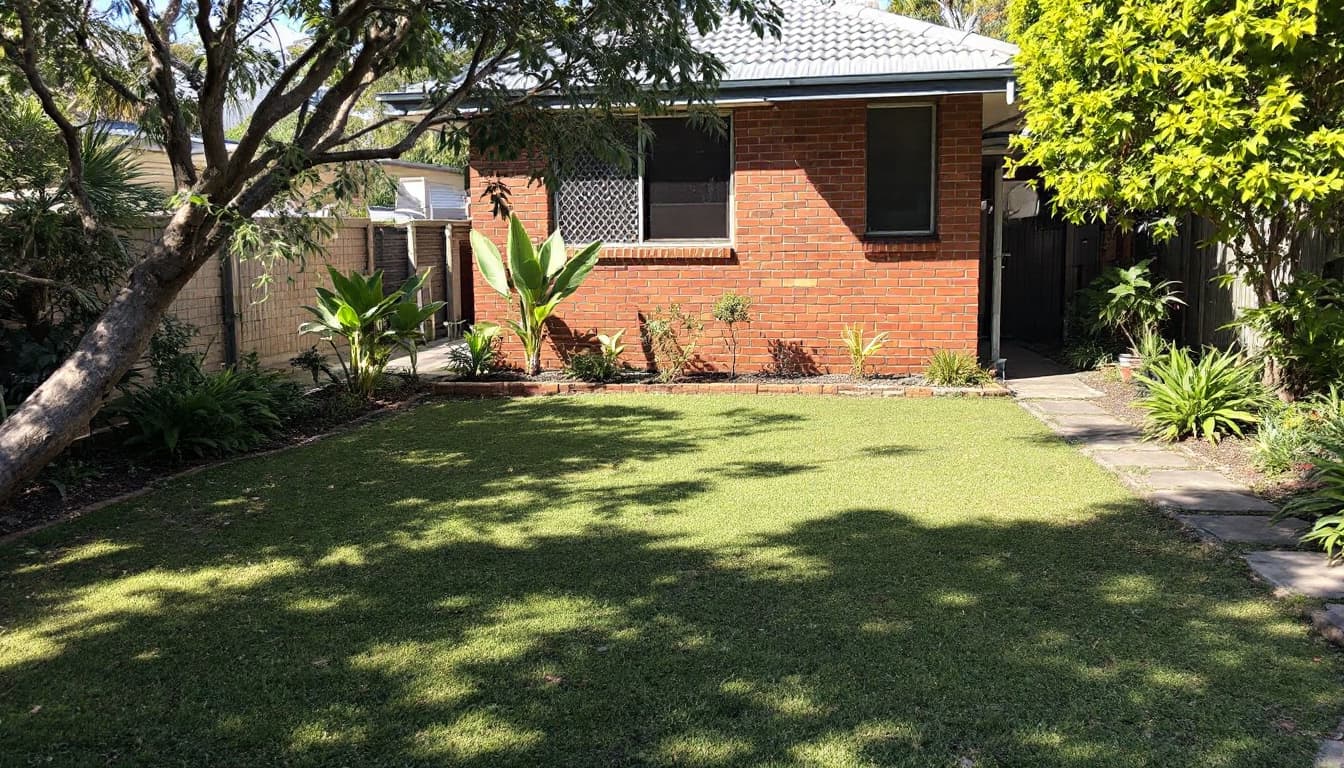
You mow on Saturday, feel good about it, and by Wednesday your buffalo lawn looks like it's trying to reclaim the garden bed. Two weeks of December rain later, you're wading through calf-high grass that clumps under the mower deck, leaves brown windrows across the lawn, and takes three passes to cut properly. Sound familiar? You're not doing anything wrong — you're fighting SEQ's wet season growth curve with a dry-season mowing schedule, and that mismatch is exactly why your lawn looks scruffy nine days out of fourteen.
Why Your Lawn Suddenly Can't Be Tamed
Grass growth is driven by three inputs: soil temperature, moisture, and daylight. From October through March, Brisbane typically sees soil temperatures sitting above 20°C — the threshold where buffalo (Stenotaphrum secundatum) and couch (Cynodon dactylon) shift into active vertical and lateral growth. Add Brisbane's characteristic wet-season rainfall (historically 700–800mm falls between December and March, roughly two-thirds of our annual 1150mm average) and you've got warm roots, saturated soil, and long days all pushing the plant to grow simultaneously.
Paspalum, which loves disturbed, moist soil and pops up aggressively along driveway edges and thin buffalo patches, grows even faster under these conditions — its seed heads can appear within days of a growth flush, which is why it looks like it's "taken over" overnight.
The mowing problem compounds this. Wet grass blades are turgid — cells swollen with water — which means they bend under the mower blade instead of shearing cleanly. Instead of a crisp cut, you get tearing, bruised leaf tips that brown off within 48 hours, and wet clippings that clump and smother the leaf blades beneath them. That clumping blocks light and traps humidity at the crown of the plant — precisely the environment brown patch and fusarium fungal diseases need to establish. So mowing wet grass doesn't just look messy; it actively creates disease pressure in a season when humidity is already working against you.
The Numbers That Explain Your Frustration
Here's the maths homeowners rarely do: in peak wet season, buffalo and couch lawns in SEQ can add 15–25mm of leaf height per week under good rainfall and warmth — sometimes more with paspalum incursion. The "one-third rule" (never removing more than a third of leaf blade in a single cut) means if your lawn sits at 40mm, you should be mowing again once it hits roughly 55–60mm — which, at that growth rate, is every 5 to 7 days, not the fortnightly schedule that works fine in June.
Skip that window and you're not just cutting grass — you're scalping it. Removing more than a third of the leaf blade in one pass shocks the plant, forces it to draw on root reserves to recover, and opens a two-to-three-week window of thinner turf that's more vulnerable to weed invasion — paspalum and bindii being the usual opportunists in SEQ lawns.
How to Actually Get Ahead of It
-
Track growth, not the calendar. During Dec–Mar, check blade height every 5 days rather than assuming a fixed fortnightly slot. If you can't remember the last cut, that's your signal.
-
Mow on the dry side of the rain, not the wet side. Aim for a window at least 24 hours after rain when the canopy has dried but the soil hasn't baked hard. Early morning after a storm-season overnight shower is often your best cut, before the afternoon downpour returns.
-
Raise your cutting height in wet season. Buffalo cut to 50–80mm (rather than the winter 30–40mm) shades the soil, suppresses paspalum seed germination, and copes better with rapid regrowth without stressing the crown.
-
Sharpen blades monthly through summer, not seasonally. A blunt blade on wet, turgid grass tears rather than slices — the single biggest cause of that grey-brown, "unhealthy" look homeowners blame on disease when it's actually mechanical damage.
-
Catch or disperse clippings deliberately. In heavy wet-season growth, clumped wet clippings smother the lawn beneath them within days. Either catch and compost, or mow with a mulching blade and go over the lawn a second time (at a slight angle) to disperse clippings finely enough that they break down instead of matting.
-
Spot-treat paspalum clumps early. Once seed heads form, mowing spreads paspalum seed across the rest of the lawn. Catching it before flowering (usually within the first 2 weeks of a growth flush) stops the spread mechanically rather than chemically.
When the Wet Season Wins Anyway
Realistically, most SEQ homeowners can't hit a strict 5–7 day mowing window around work, weather, and life — and that's precisely where lawns get away from people every summer. This is the exact problem our scheduled mowing service is built to solve: we track local rainfall and growth conditions suburb by suburb across Brisbane, Ipswich, and Toowoomba, and adjust your mow frequency through the wet season instead of running a fixed fortnightly round that leaves your lawn scalped or shaggy.
If your buffalo or couch lawn has been getting ahead of you this summer, have a look at our mowing services or get a quote — we'll build a wet-season schedule around your actual growth rate, not the calendar.