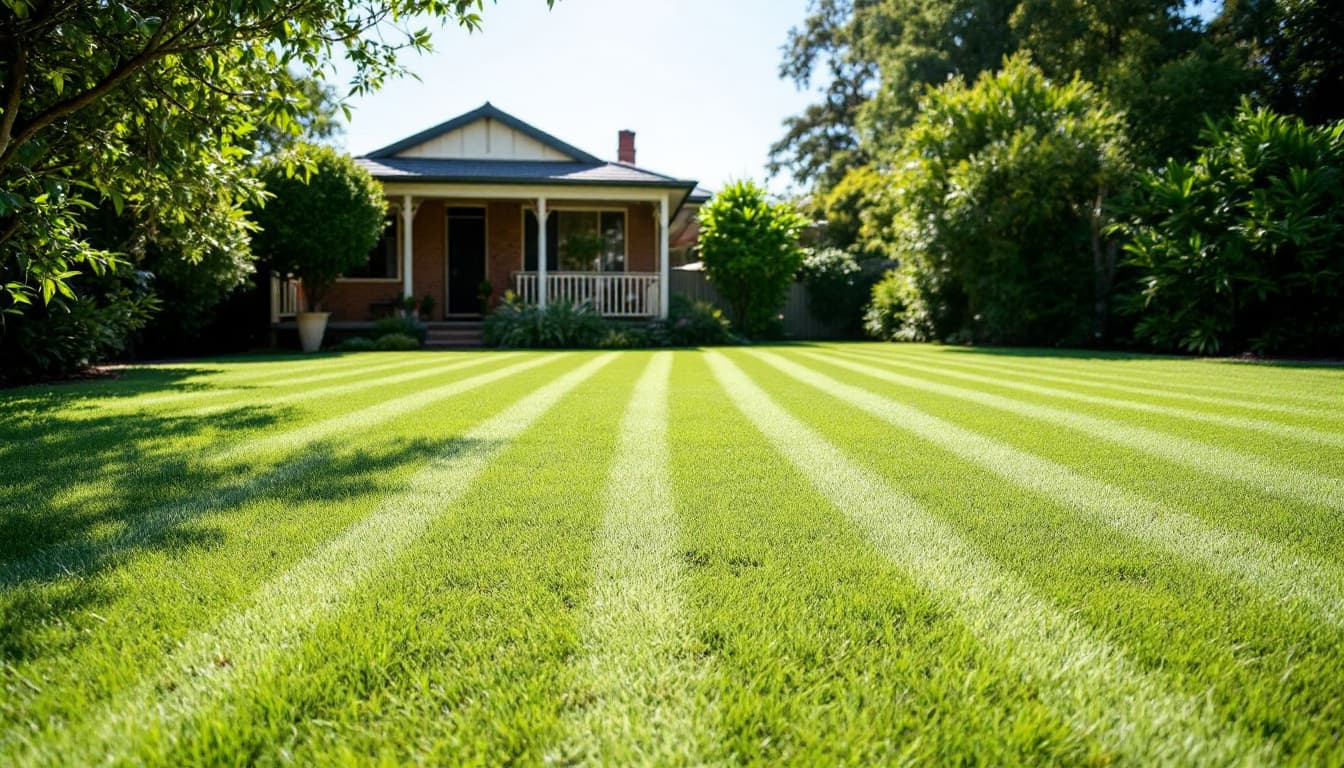
A properly edged lawn should show a clean vertical cut of 5 to 8 centimetres deep along garden beds and hard surfaces, with a distinct soil-to-turf "wall" you can see, not just a shallow scalp from a whipper snipper. If your contractor is leaving a fuzzy, chewed-looking transition between lawn and mulch, that's not a style difference, it's the wrong tool for the job.
Why Do Contractors and Homeowners Disagree on Edging Depth?
Most disputes come down to two completely different techniques being marketed as the same service. A whipper snipper (line trimmer) held vertically only trims leaf blade at the surface. It cannot cut through the thatch layer or root mass, so it leaves a ragged, unstable edge that regrows within 7 to 10 days in Brisbane's growing season. A proper edger, whether a mechanical bed edger, edging shears, or a half-moon spade, physically severs the root zone to a set depth, creating a defined trench between turf and garden bed.
This matters more in SEQ than most homeowners realise. Our common turf types, Buffalo and Couch, spread via stolons and rhizomes respectively. Couch in particular is aggressive; DPI trial data shows couch rhizomes can extend 15 to 20cm laterally per month during peak summer growth (Dec to Feb). A whipper-snipper "edge" does nothing to stop that lateral runner invading your garden bed. Only a true root-depth cut interrupts the rhizome and forces the plant to redirect growth back into the lawn area.
What's Actually Happening Underground When Edging Is Too Shallow
Brisbane's soil profile is the other half of the story. Much of SEQ sits on a clay-sand transition, sandy loam topsoil over a heavier clay subsoil, particularly noticeable in suburbs like Bridgeman Downs and Albany Creek. When edging is shallow (under 3cm), the trench doesn't reach the denser clay layer, so it collapses back within weeks, especially after the storm-season deluges Brisbane sees between December and March (averaging a chunk of our ~1150mm annual rainfall in that window). A deeper 5 to 8cm cut anchors into firmer subsoil and holds its line through wet-season slumping.
Conversely, homeowners in sandier pockets like Fitzgibbon or Zillmere sometimes over-cut, going 10cm-plus, which destabilises the bed edge entirely, causing mulch wash-out during heavy rain and exposing turf roots to desiccation.
How Deep Should Lawn Edging Actually Be, By Situation
The "right" depth isn't one universal number, it depends on turf type, soil, and edge function:
| Edge type | Recommended depth | Why |
|---|---|---|
| Buffalo lawn against garden bed | 5 to 6cm | Buffalo's shallow stolon growth needs less depth to contain |
| Couch lawn against garden bed | 7 to 8cm | Deeper rhizomes need a firmer barrier to prevent invasion |
| Lawn against hard edge (path, driveway) | 3 to 4cm vertical face | Concrete already blocks lateral spread; deep cutting risks undermining the slab |
| Clay-heavy soil (e.g. Bridgeman Downs) | Cut to reach clay layer, typically 6 to 8cm | Anchors the trench so it survives wet season |
| Sandy loam soil (e.g. Fitzgibbon) | 4 to 5cm max | Prevents bed collapse and erosion |
The Real Cost of Getting Edging Wrong
A shallow "whipper snipper edge" isn't just cosmetically softer, it's a recurring cost. Because it doesn't cut the root mass, regrowth is faster, meaning many mow-and-edge services either have to re-edge every single visit (driving up labour time and price) or skip it and let the lawn creep into beds. Left unchecked for a full growing season, turf encroachment into garden beds in SEQ can average 10 to 15cm of lawn creep per year, based on typical couch and buffalo growth rates recorded in regional turf trials. That's mulch, soil, and often irrigation lines being smothered, plus the labour cost of eventually digging out established grass that's colonised a bed, which takes three to four times longer than a routine maintenance edge.
How to Check and Fix Your Lawn's Edging Yourself
- Inspect the current edge. Run a finger along the lawn-to-bed transition. If it's soft, crumbly, or you can't feel a clear step down, it's surface-trimmed only.
- Choose the right tool for depth. A half-moon edger or mechanical bed edger is required for anything beyond a light touch-up; a whipper snipper is not a substitute.
- Cut to species-appropriate depth. 5 to 6cm for Buffalo, 7 to 8cm for Couch, angled slightly toward the lawn so water drains away from the bed, not into it.
- Time it around rainfall. Edge 24 to 48 hours after rain when Brisbane's clay-transition soils are workable but not waterlogged, avoiding compaction and smearing.
- Maintain on a cycle. Re-cut every 3 to 4 weeks in summer growth months (Oct to Mar), stretching to 6 to 8 weeks in cooler months (Jun to Aug).
- Reset annually. Once a year, deepen the cut back to full spec, since gradual soil movement and root fill will shallow the trench over 12 months even with regular maintenance.
When It's Time to Bring in the Professionals
If you're locked in a back-and-forth with a contractor over "why doesn't it look like the display homes in Springfield or North Lakes," the honest answer is usually depth and tool choice, not effort. At Yard Guru, every mowing visit includes proper root-depth edging as standard, using bed edgers and line trimmers for their correct, separate purposes, not one tool doing both jobs badly. We're fully insured (including at heights) for properties needing garden bed work near retaining walls or sloped blocks common in Toowoomba's Rangeville and Middle Ridge areas.
If your lawn's edges are already overrun or you want a reset before summer's growth surge, check our full range of services at /services or get a tailored, no-surprises price at /quote.
Common Questions
Why does my lawn edge grow back so fast after the mower guy trims it?
If the edge regrows within 7 to 10 days, it's likely being cut with a whipper snipper at the surface rather than a proper edger reaching the root zone. Only a cut into the root mass (5 to 8cm deep) interrupts turf growth long enough to slow regrowth, especially with aggressive spreaders like Couch.
How deep should you cut lawn edges in Brisbane clay soil?
In clay-heavy areas like Bridgeman Downs, aim for 6 to 8cm so the trench reaches the firmer clay subsoil and holds its shape through storm-season rain. Shallower cuts under 3cm tend to collapse back within weeks once the wet season hits.
Is a whipper snipper enough to edge my lawn properly?
No, a whipper snipper only trims leaf blade at the surface and can't cut through the thatch or root layer, leaving a ragged edge that regrows quickly. A half-moon edger or mechanical bed edger is needed to create a true root-depth cut of 5 to 8cm.