It starts with a phone call from the neighbour, or worse, a text with a photo attached: your Leyland cypress hedge is now leaning over the Colorbond fence line, and their pergola bracket is bent. Or maybe it's your own fence: the palings bowing outward, the top rail cracking under the weight of a hedge that was "just going to get trimmed next year." We see this constantly across Brisbane's older suburbs and the acreage blocks around Ipswich and Toowoomba: a hedge planted as a 1.5m privacy screen a decade ago is now a 5-6m wall of woody growth, and the homeowner is stuck wondering whether a trim will fix it or whether they're looking at a full removal, and a much bigger invoice.
Why "just a trim" stops being an option
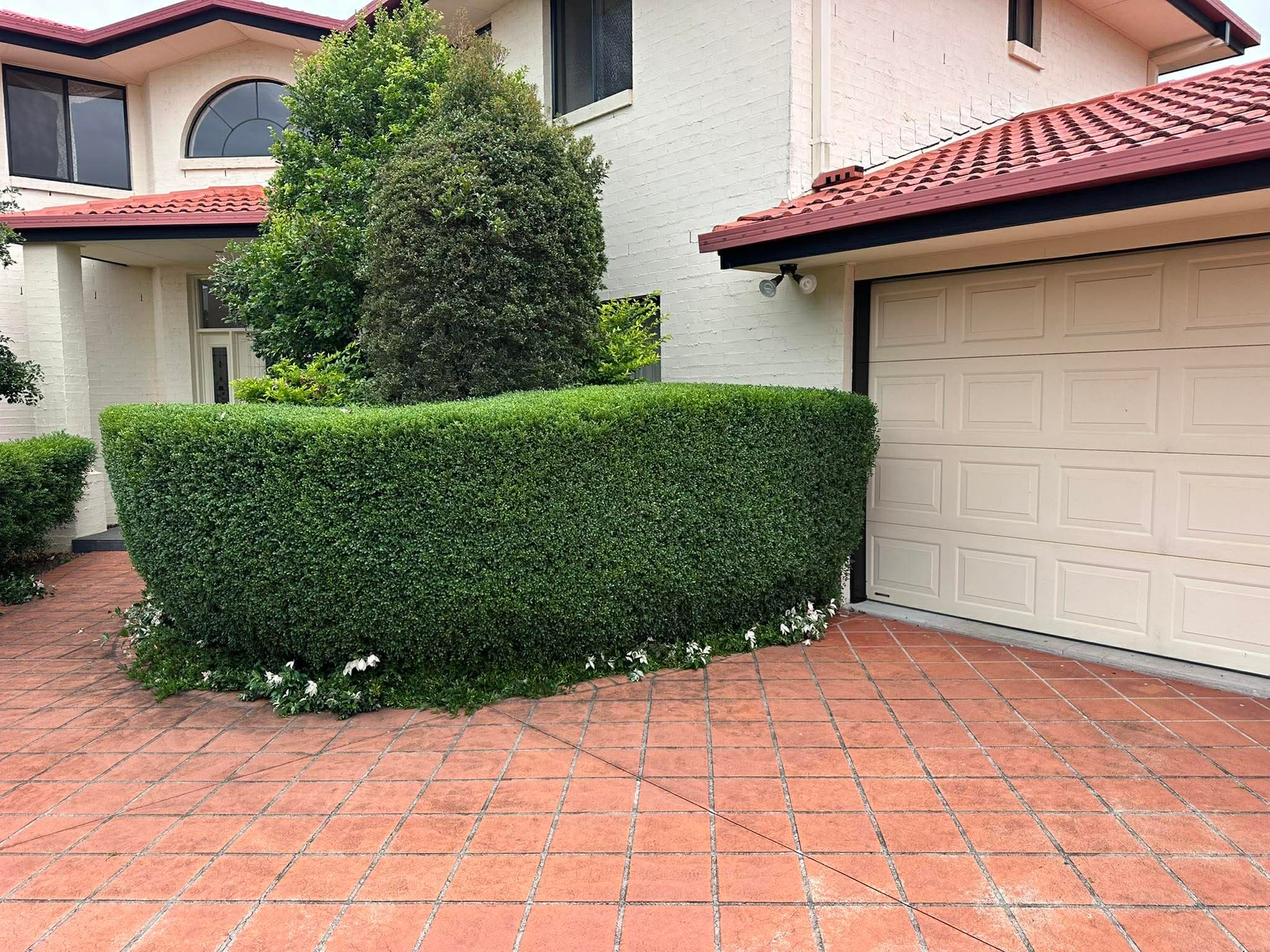
Hedging plants (conifers especially, but also lilly pilly, photinia, and murraya) only hold foliage on the outer 20-40cm of their canopy. Inside that green shell is a network of bare woody stems that have never seen sunlight because the outer growth has shaded them out for years. This isn't a maintenance oversight; it's basic plant physiology. Chlorophyll production requires light, and once a branch is enclosed by denser growth for more than 2-3 growing seasons, the buds along that wood become dormant or die off entirely.
This matters enormously when you're deciding whether to cut a hedge back hard. Species split into two camps:
- Regrowth from old wood (epicormic budding): Most broadleaf hedging plants (lilly pilly, photinia, box, murraya) carry dormant buds under the bark even on old wood. Cut them back hard and they'll usually reshoot within 6-10 weeks in the warmer months.
- No regrowth from bare wood: Conifers (cypress, leylandii, Thuja, junipers) are the problem children. Once you cut back past the green foliage line into bare brown wood, that section will not reshoot, ever. You're left with a permanent dead zone, essentially an unfixable bald patch in the hedge.
This is exactly the debate we have on-site regularly: a contractor eyeing a client's overgrown conifer row, knowing that an aggressive cut to bring it back within the boundary will expose 1.5-2m of dead wood that never recovers. At that point "trimming" isn't a solution. It's cosmetic surgery that leaves a scar for the rest of the hedge's life.
The real cost of waiting
We had a client in Ipswich who deferred a hedge trim for budget reasons over roughly 18 months. In that window, a row of six Leyland cypress went from 3m to just under 6m, verified against pre-existing fence photos. Cypress in SEQ's warm, humid growing conditions can push 60-100cm of new growth per year once established, well above the 30-40cm you'd see in cooler climates. Waiting doesn't pause the problem; it compounds it.
The financial reality: a routine annual hedge trim on a 15m fence line typically runs a fraction of the cost of a full removal and replant once that hedge has doubled in height and girth. Removal pricing scales heavily with trunk diameter, root system size, and whether stump grinding and green waste disposal are required, and by the time a hedge is structurally compromised or split at the base (common in wind events during Brisbane's Nov-Mar storm season, when gusts regularly exceed 90km/h in severe thunderstorm cells), you're often looking at 3-5x the cost of the trim you skipped.
The decision framework: trim, hard-prune, or remove?
1. Check the foliage-to-deadwood ratio. Push into the hedge and look at how much green is left versus bare wood. If less than 40% of the plant carries live foliage, a corrective trim will leave visible dead zones no matter how it's shaped.
2. Identify the species before you cut. Broadleaf (lilly pilly, photinia, murraya, box): hard pruning into old wood is generally safe and will regenerate. Conifer (cypress, juniper, Thuja): never cut past the green line. If the hedge needs to come down in height and the green growth won't cover it, removal is the only option that doesn't leave a permanent eyesore.
3. Inspect the base and root plate. Get down low and check for lean, soil heaving on one side, or cracking at ground level, all signs of root or trunk failure risk, especially relevant in SEQ's clay-heavy soils where waterlogging after storm season softens root anchorage. A leaning hedge near a fence or structure is a removal candidate regardless of species.
4. Measure clearance to fences, eaves, and power lines. If the hedge is already contacting or overhanging infrastructure, don't schedule a "light trim"; you need a structural reduction assessed by someone who can judge regrowth capacity, or a removal quote.
5. Get it assessed before the next storm season, not after. Wind-loading on an oversized, top-heavy hedge is a real risk to fences and structures once cyclonic gusts or severe thunderstorm activity hits between December and March.
Don't let "next year" become "twice as tall"
If you're staring at a hedge that's crept past the point of a simple tidy-up, the smart move is an on-site assessment before you commit either way. Our crews across Brisbane, Ipswich, and Toowoomba deal with exactly this call daily, telling clients honestly when a hard prune will bring a hedge back cleanly, and when it's cheaper and better for the fence line to remove and replant with something more manageable. Check out our hedge trimming service or get a quote before that hedge (or your fence) makes the decision for you.